Introduction
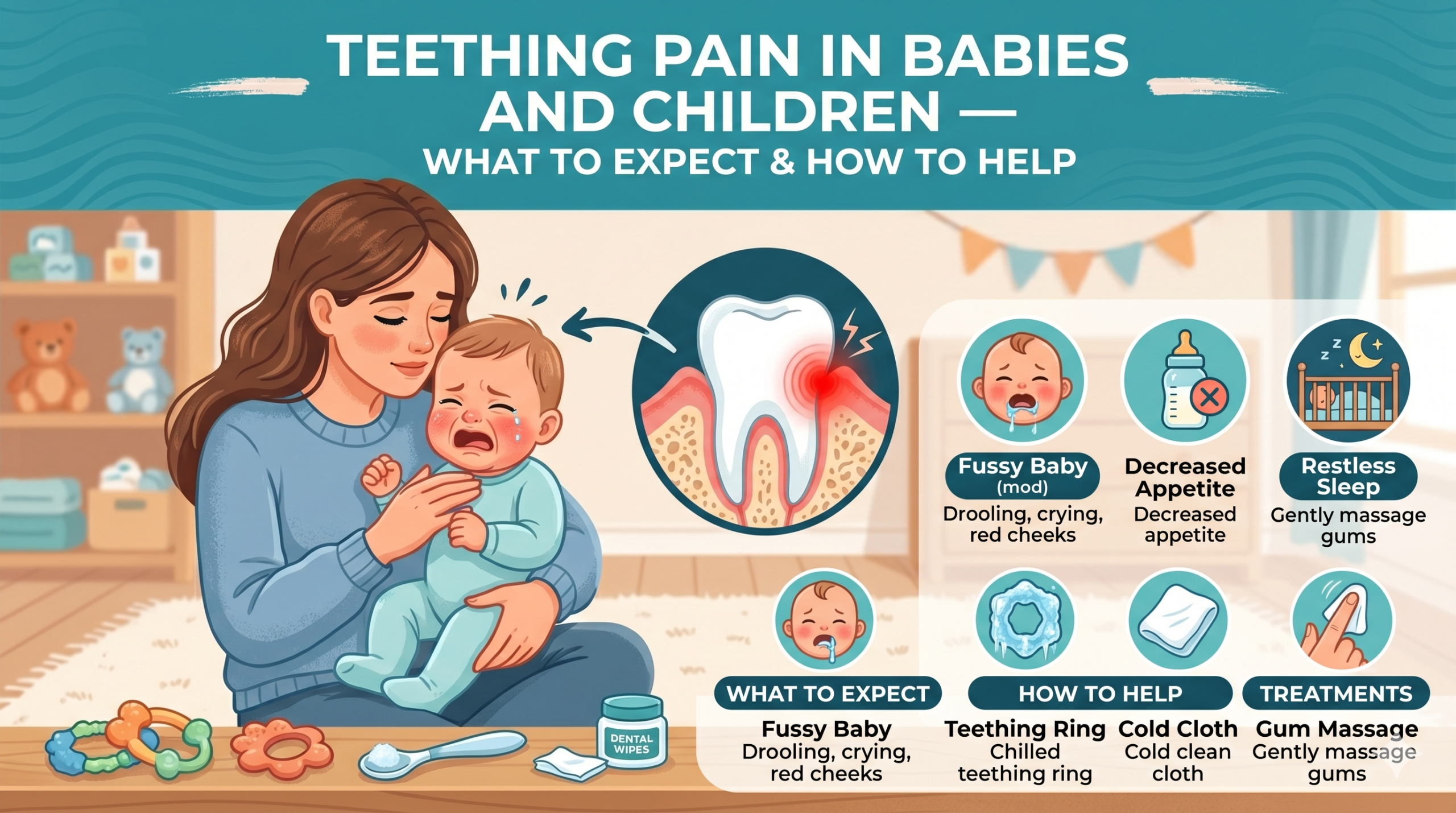
Every parent knows the signs. Your baby — who was sleeping reasonably well and eating happily — suddenly becomes clingy, irritable, and impossible to settle. There is extra drool everywhere. They keep putting their fists in their mouth. And at some point, someone says: “It must be teething.”
Sometimes it is. Sometimes it is not. And knowing the difference matters — because not every symptom gets blamed on teething should be, and not every remedy people reach for is actually safe.
This guide gives you a clear picture of what teething actually involves, when it happens, what symptoms are genuinely caused by it, and — most importantly — what you can safely do to comfort your child through it.
When Does Teething Start?
Most babies begin teething between 4 and 7 months of age, though anywhere between 3 months and 12 months is considered within the normal range. If your baby has no teeth by their first birthday, it is worth mentioning to a dentist — but in most cases, late teething simply runs in the family.
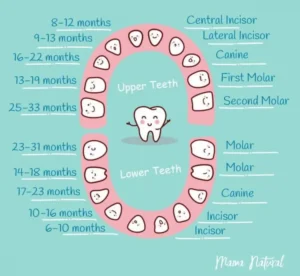
Teething continues in stages through early childhood. Here is a general timeline of when different teeth typically appear:
| Teeth | Approximate Age |
| Lower central incisors (bottom front) | 6 – 10 months |
| Upper central incisors (top front) | 8 – 12 months |
| Upper lateral incisors | 9 – 13 months |
| Lower lateral incisors | 10 – 16 months |
| First molars | 13 – 19 months |
| Canines | 16 – 23 months |
| Second molars | 23 – 33 months |
By around age 3, most children will have a full set of 20 primary (baby) teeth. These baby teeth are then gradually replaced by permanent teeth from around age 6 onwards — a process that continues into the early teenage years.
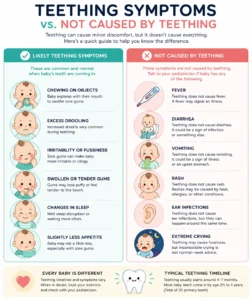
Symptoms That Are Genuinely Caused by Teething
One of the most common challenges for parents is knowing which symptoms are actually from teething and which need a separate explanation.
Research and clinical experience consistently point to a specific set of symptoms that are directly associated with teething. These include:
Drooling more than usual. Teething stimulates saliva production significantly. Expect bibs to get a lot of use during this period.
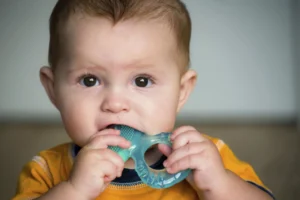
Chewing and gnawing on everything. The counter-pressure of biting down on something firm provides temporary relief from the pressure building beneath the gums.
Swollen, tender gums. You may be able to see or feel a raised, reddish area where a tooth is about to emerge. The gum tissue stretching over an incoming tooth can be genuinely uncomfortable.
Irritability and disrupted sleep. Mild discomfort from teething can make babies harder to settle, particularly at night when there are fewer distractions.
Slightly raised temperature. A very mild increase in body temperature — not a true fever — is associated with teething in some babies. The distinction matters, which brings us to what teething does not cause.
Symptoms That Are NOT Caused by Teething
This is where it is important to be clear — because attributing the wrong symptoms to teething can delay the identification of something that genuinely needs attention.
Teething does not cause:
- High fever (above 38°C / 100.4°F). If your baby has a proper fever, something else is going on — a viral infection, ear infection, or other illness. Do not assume it is just teething.
- Diarrhoea. Despite being a commonly repeated belief, there is no reliable clinical evidence that teething causes loose stools. If your baby has diarrhoea, look for another cause.
- Persistent, inconsolable crying. Some discomfort is normal. But a baby who cannot be soothed for extended periods may be unwell for a different reason.
- Rashes on the body. A rash around the mouth from excessive drool is common. A rash elsewhere on the body is not caused by teething.
If your child has a fever, diarrhoea, or is significantly unwell alongside teething symptoms, please consult a paediatrician — not just a dentist.
Safe Ways to Relieve Teething Pain
There is no shortage of teething remedies out there — but not all of them are safe or effective. Here is what genuinely helps.
Chilled (Not Frozen) Teething Rings
A teething ring that has been cooled in the refrigerator — not the freezer — provides soothing counter-pressure and mild numbing from the cold. Frozen teething rings can be too hard and cold, potentially bruising already tender gum tissue.
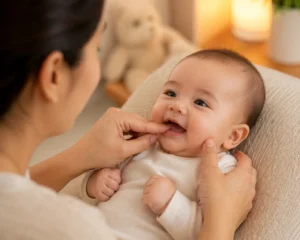
Gentle Gum Massage
Clean your finger thoroughly and gently rub the sore gum area in small circles. The pressure can provide temporary relief. Some babies find this very soothing; others may resist it. Follow your baby’s lead.
Chilled Foods (for babies on solids)
For babies who have started solid foods, chilled purees, cold yoghurt, or refrigerated cucumber sticks can provide relief while also being nourishing. Always supervise closely and avoid anything that poses a choking risk.
Wiping Away Drool
Excessive drool left on the skin can cause a mild rash around the mouth and chin. Keep the area gently wiped and, if needed, apply a fragrance-free barrier cream to protect the skin.
Age-Appropriate Pain Relief
If your baby is genuinely distressed and nothing else is working, paracetamol or ibuprofen in the correct dosage for your baby’s age and weight can help. Always follow the dosage instructions and consult your paediatrician if you are unsure.
What to Avoid
Some teething remedies that are widely used are worth approaching with caution.
Teething gels containing benzocaine or lidocaine are not recommended for infants by most paediatric and dental associations. These topical anaesthetics are quickly washed away by saliva, provide minimal benefit, and carry a small risk of serious side effects in babies.
Amber teething necklaces are widely sold and widely used — but they carry a real risk of strangulation and choking and have no clinical evidence of effectiveness. Most paediatric bodies recommend against them.
Rubbing alcohol or homeopathic teething tablets of uncertain composition should also be avoided.
When in doubt about any remedy, ask your child’s paediatrician or a paediatric dentist before using it.
When Should You Take Your Baby to the Dentist?
The general recommendation is that a child should have their first dental visit by their first birthday — or within 6 months of the first tooth appearing, whichever comes first.
This might seem early, but the first visit is not about complex treatment. It is about establishing a relationship with dental care before fear or anxiety can develop, checking that erupting teeth look healthy, and giving parents practical guidance on cleaning, diet, and what to expect next.
Starting early also means any issues — like an unusually positioned tooth or signs of early decay — are caught before they become problems that are harder to manage.
Caring for Baby Teeth — It Matters More Than You Think
A common misconception is that baby teeth do not matter much because they will fall out anyway. In reality, baby teeth are important for several reasons — they hold space for the permanent teeth developing beneath them, they support speech development, and they allow a child to chew and eat properly during critical growth years.
Decay in baby teeth can cause pain, infection, and early tooth loss — which in turn can affect how the permanent teeth come through. Starting dental hygiene early — even before teeth appear, by gently wiping the gums with a clean cloth — sets up good habits that carry into childhood and beyond.
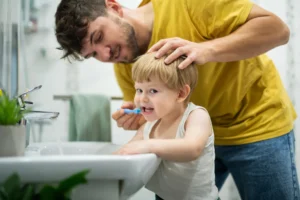
As soon as the first tooth appears, begin brushing with a rice-grain-sized amount of fluoride toothpaste twice a day. You do not need to wait until your child can spit.
FAQs
- My baby is 10 months old and has no teeth yet. Should I be worried? Not necessarily. The teething timeline varies widely and is largely genetic. However, if there are no teeth by 12 to 15 months, it is worth a dental check just to confirm that the teeth are developing normally beneath the gums.
- How long does teething pain last? Individual teeth typically cause discomfort for a few days before and after they break through the gum. Since teething happens in stages over several years, there will be on-and-off periods of discomfort — but it is not continuous.
- Can teething cause nappy rash? The link between teething and nappy rash is not well supported by evidence. However, if a baby is drooling more and swallowing more saliva than usual, it can occasionally affect stool consistency — which may in turn irritate skin. If nappy rash is severe or persistent, consult your paediatrician.
- Should I use a finger brush or a regular toothbrush for my baby? Either can work for early teeth. A soft-bristled baby toothbrush is generally easy to use and gets children used to the sensation of brushing. Finger brushes are a good starting point for very young babies with just one or two teeth.
- My toddler refuses to let me brush their teeth. What should I do? This is extremely common. Try making it part of a routine — same time, same place. Let them hold a toothbrush while you brush theirs. Use a song or a timer. Some children respond well to choosing their own toothbrush. If resistance is persistent, your dentist can offer practical tips tailored to your child’s age and temperament.
Published by Vivaan Dental Clinic | Sector 90, Gurugram
Your child’s dental health starts earlier than most parents realise. We are here to help from the very first tooth.