
Tooth Extraction in Gurgaon
- Home
- Tooth Extraction in Gurgaon
What Is Tooth Extraction?
Nobody wants to lose a tooth. And honestly, neither do we. At Vivaan Dental Clinic, tooth extraction is always the last option — we try everything possible to save a natural tooth before recommending removal
But sometimes, a tooth is too damaged, too infected, or causing too much harm to the surrounding teeth to be kept. In those situations, removing the tooth is actually the kindest thing you can do for your overall oral health. It stops the pain, prevents the infection from spreading, and protects the teeth around it.
Tooth extraction today is nothing like what most people imagine. With modern techniques and effective local anaesthesia, the procedure is quick, controlled, and far more comfortable than most patients expect. Many patients are surprised to say — it was not nearly as bad as they thought it would be.
Types of Tooth Extractions
Not every extraction is the same. Depending on the condition and position of the tooth, there are two main types:
Simple Extraction This is done when the tooth is fully visible above the gum line and can be removed in a straightforward manner. The dentist loosens the tooth gently and removes it in one piece. It is quick, simple, and done under local anaesthesia so you feel no pain at all.
Surgical Extraction This is needed when the tooth is broken at the gum line, has not fully come out of the gum, or is deeply embedded in the jawbone — like impacted wisdom teeth. A small incision is made in the gum to access the tooth, and it is carefully removed in sections if needed. It sounds more complex, but with proper anaesthesia and an experienced dentist, it is still a very manageable procedure.
Your dentist will examine your tooth and take an X-ray before deciding which type of extraction is needed — and will explain everything clearly before proceeding.
When Do You Need a Tooth Extraction?
Tooth extraction is recommended only when there is no better alternative. Here are the most common situations where a tooth needs to be removed:
- The tooth has severe decay that has gone too deep to be saved with a filling or root canal
- The tooth is badly cracked or broken and cannot be repaired with a crown
- There is a serious infection around the tooth that has not responded to antibiotics or root canal treatment
- The tooth is loose due to advanced gum disease and the surrounding bone has been lost
- A milk tooth has not fallen out on its own and is blocking the permanent tooth from growing in correctly
- Teeth need to be removed to create space before orthodontic treatment such as braces or Invisalign
- A wisdom tooth is causing pain, infection, crowding, or growing in the wrong direction
In every case, the decision to extract a tooth is made only after a thorough examination and discussion with you — never without your understanding and consent.
All About Wisdom Teeth — What They Are and Why They Cause Problems
Wisdom teeth are the last set of molars that grow at the very back of your mouth — one in each corner.
They usually appear between the ages of 17 and 25, which is why they are called wisdom teeth — they come in at an age when a person is supposedly wiser.
For most people, wisdom teeth cause problems. Our jaws today are simply not large enough to comfortably fit these extra teeth. As a result, wisdom teeth often get stuck — either partially coming out of the gum or growing at an angle — a condition called impaction.
Here is why impacted wisdom teeth need attention:
They are very difficult to clean properly, which leads to decay and infection
They push against the neighbouring tooth, causing pain and damage
They can cause crowding of the front teeth over time
The gum flap over a partially emerged wisdom tooth traps food and bacteria, leading to a painful infection called pericoronitis
In rare cases, a cyst can form around the impacted tooth and damage the surrounding bone
Not all wisdom teeth need to be removed. If they are growing straight, fully out, and not causing any problems, they can stay. But if they are causing pain, infection, or crowding — removal is the right decision.
Signs Your Wisdom Tooth Needs to Come Out
Wisdom teeth do not always announce themselves quietly. Watch out for these signs:
.
1 Pain or pressure at the back of your mouth or jaw
2 Swelling or tenderness in the gum behind your last molar
3 Difficulty opening your mouth fully
4 Pain that radiates to your ear, jaw, or neck
5 A bad taste in your mouth near the back teeth
6 Repeated infections or swelling in the same area
7 The neighbouring tooth is starting to feel sensitive or painful
8 Your dentist can see on an X-ray that the wisdom tooth is growing at an angle or is stuck
If you are experiencing any of these signs, visit a dentist in Gurgaon for an X-ray and assessment. Waiting usually makes the situation worse — not better.
The Tooth Extraction Procedure — Step by Step
Here is exactly what happens when you come in for a tooth extraction at Vivaan Dental Clinic, Gurgaon:
The dentist examines the tooth and takes a digital X-ray to understand the shape of the roots, the position of the tooth, and the condition of the surrounding bone. This helps plan the extraction precisely.
Local anaesthesia is administered around the tooth to completely numb the area. You will feel no pain during the procedure — only mild pressure in some cases. For anxious patients, we take extra care to ensure you are fully comfortable before we begin.
For a simple extraction, the dentist uses a specialised instrument to gently loosen the tooth from the socket by moving it back and forth. For a surgical extraction, a small incision is made in the gum to access the tooth.
Visit the clinic every 6–8 weeks for progress tracking and new aligners. Once complete, you'll receive retainers to keep your teeth in place — an essential final step.
Tooth Extraction
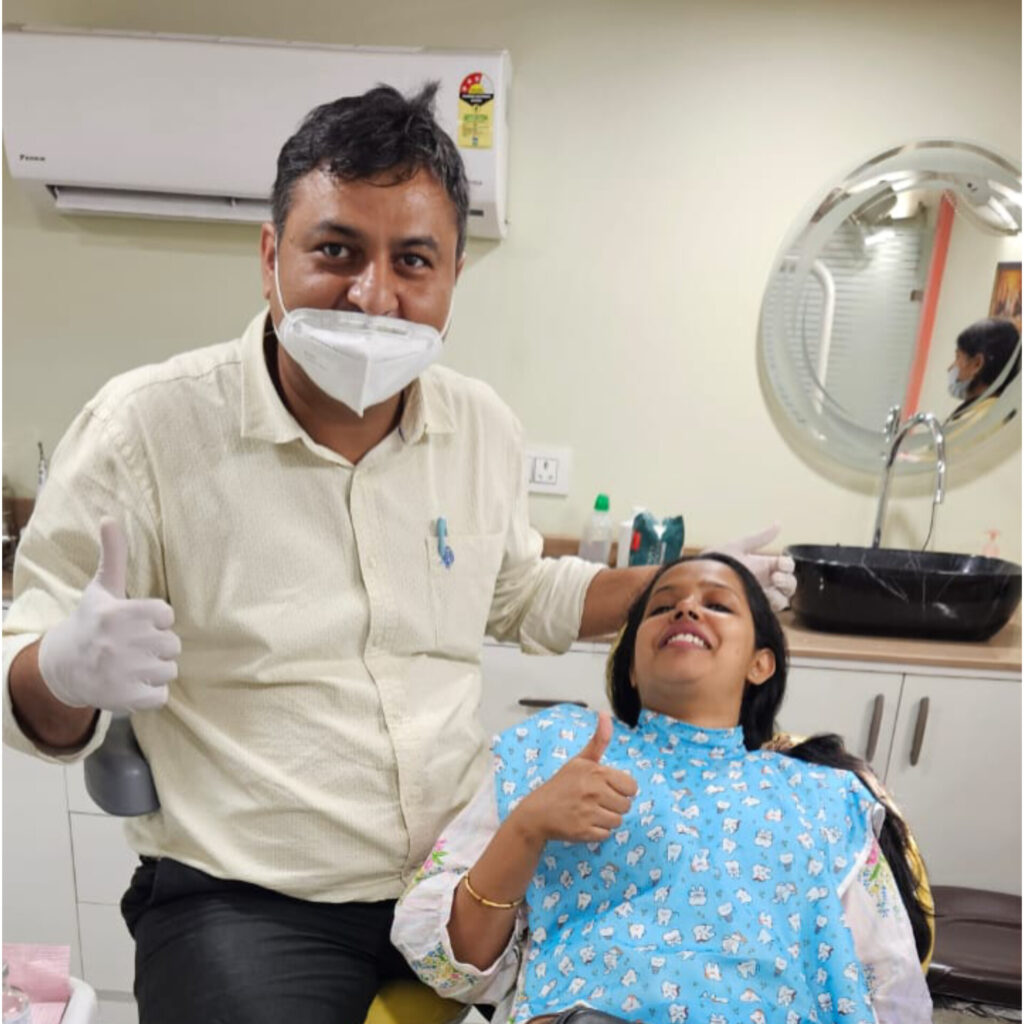
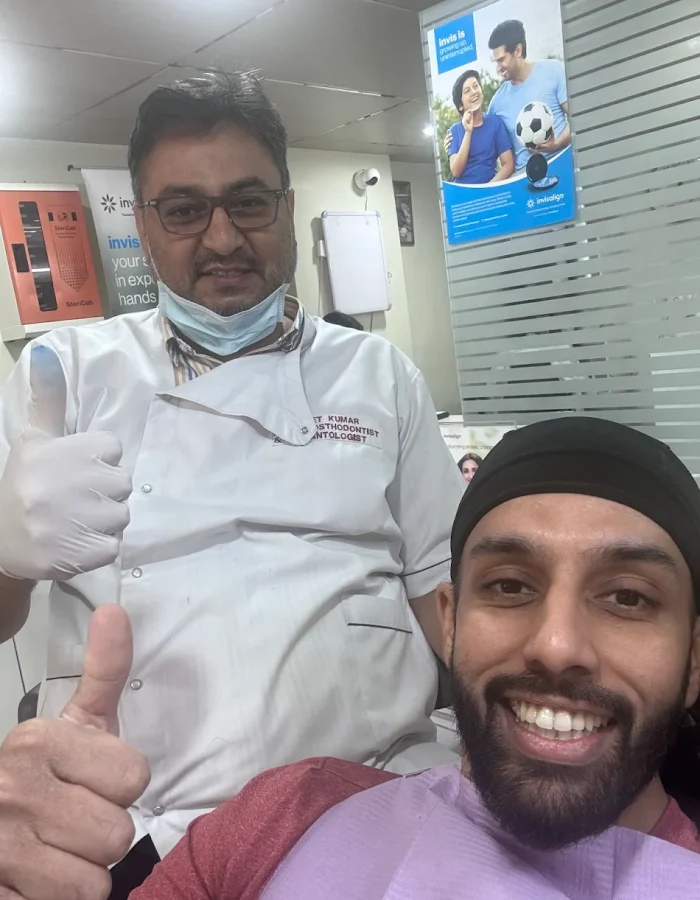
Wisdom Tooth Removal in Gurgaon — What to Expect
Wisdom tooth removal sounds intimidating — but at Vivaan Dental Clinic in Sector 90, Gurgaon, we make it as smooth and stress-free as possible.
After the X-ray and examination, your dentist will explain whether your wisdom tooth needs a simple or surgical removal. On the day of the procedure, the area is thoroughly numbed so you feel comfortable throughout. Most wisdom tooth removals are completed within 20 to 45 minutes depending on how the tooth is positioned.
After the procedure you may feel some swelling, mild soreness, and stiffness in your jaw for 2 to 3 days — this is completely normal and part of the natural healing process. Painkillers and anti-inflammatory medicines are prescribed to keep you comfortable during recovery.
Most patients are back to their normal routine within 3 to 5 days.
Aftercare Tips After Tooth Extraction
How well you take care of the extraction site in the first few days directly affects how quickly and smoothly you heal. Follow these simple guidelines:
Do:
- Bite gently on the gauze for 30 to 45 minutes after the procedure to help the clot form
- Take your prescribed medicines on time — especially antibiotics and painkillers
- Eat soft foods like dal, khichdi, curd, mashed vegetables, and soups for the first 2 to 3 days
- Rinse gently with warm salt water starting from the second day after extraction
- Keep your head elevated when sleeping for the first night to reduce swelling
- Apply a cold pack on the outside of your cheek for 15 minutes at a time to manage swelling
Do Not:
- Do not spit forcefully, rinse aggressively, or use a straw for at least 24 hours — this can dislodge the blood clot and cause a painful condition called dry socket
- Do not smoke or consume alcohol for at least 48 hours after extraction
- Do not poke the extraction site with your tongue or finger
- Do not eat hard, crunchy, or very hot foods in the first few days
- Do not skip your follow-up visit if one has been scheduled
What Is Dry Socket and How to Avoid It?
What Is Dry Socket and How to Avoid It?What Is Dry Socket and How to Avoid It?
After a tooth is removed, a blood clot forms in the empty socket. This clot protects the underlying bone and nerve as the area heals. Dry socket happens when this clot gets dislodged or dissolves too early — leaving the bone and nerve exposed to air, food, and bacteria.
It causes a sharp, throbbing pain that usually begins 2 to 3 days after extraction and can sometimes radiate to the ear or jaw.
To avoid dry socket:
Do not spit or rinse forcefully for the first 24 hours
Do not smoke — smoking is one of the biggest causes of dry socket
Avoid using a straw
Eat soft foods and avoid the extraction site while chewing
If you do develop dry socket, visit our dental clinic in Gurgaon immediately. It is easily treated with a medicated dressing that provides fast relief.
What Happens After a Tooth Is Removed — Do You Need to Replace It?
Once a tooth is removed, the gap it leaves behind is more than just cosmetic. Over time an empty space in your mouth can cause several problems:
- The teeth on either side gradually tilt into the gap
- The tooth above or below the empty space starts to over-erupt — growing further out because it no longer has a tooth to meet
- Bone loss begins in the area where the tooth root used to be
- Chewing becomes uneven, putting extra pressure on the remaining teeth
- The change in bite can cause jaw pain and headaches over time
This is why replacing a missing tooth is important — not just for appearance but for the health of your entire mouth. The most common replacement options are:
- Dental Implant — the most natural and long-lasting replacement
- Dental Bridge — uses the neighbouring teeth for support
- Removable Denture — a more affordable option for multiple missing teeth
Your dentist at Vivaan Dental Clinic will discuss the best replacement option for your specific situation after the extraction has fully healed.
Cost of Tooth Extraction in Gurgaon
The cost of tooth extraction in Gurgaon depends on the complexity of the case — whether it is a simple extraction or a surgical one, and the position of the tooth. Here is a general idea:
These are general estimates. The exact cost will be discussed with you clearly after an X-ray and examination — no hidden charges, no surprises.
Why Choose Vivaan Dental Clinic for Tooth Extraction in Gurgaon?
The skill and experience of the dentist performing your extraction makes a huge difference — not just in how comfortable the procedure is, but in how smoothly you heal afterwards.
At Vivaan Dental Clinic in Sector 90, Gurgaon, our dentists have extensive experience in both simple and surgical extractions — including complex wisdom tooth removals. We take every possible step to make the procedure gentle, precise, and as comfortable as possible for every patient.
We use advanced painless injection techniques so the anaesthesia itself is not uncomfortable. We work methodically and carefully to minimise trauma to the surrounding tissue. And we make sure you leave with clear, simple aftercare instructions so your recovery is smooth and uneventful.
With 500+ five-star Google reviews and a team that genuinely puts patients first, Vivaan Dental Clinic is one of the most trusted dental clinics in Gurgaon for tooth extractions and wisdom tooth removal.
FAQs About Tooth Extraction & Wisdom Tooth Removal in Gurgaon
Is tooth extraction painful?
How long does a tooth extraction take?
How many days rest do I need after tooth extraction?
What can I eat after a tooth extraction?
Do all wisdom teeth need to be removed?
Can I drive home after a tooth extraction?
What is the right age to remove wisdom teeth?
How do I know if my extraction site is healing properly?
Tooth Pain That Won't Go Away? Come In — We Will Help.
Whether it is a damaged tooth, an infected molar, or a troublesome wisdom tooth — our team at Vivaan Dental Clinic, Sector 90 Gurgaon will examine it, explain your options clearly, and take care of it as gently as possible.