Introduction
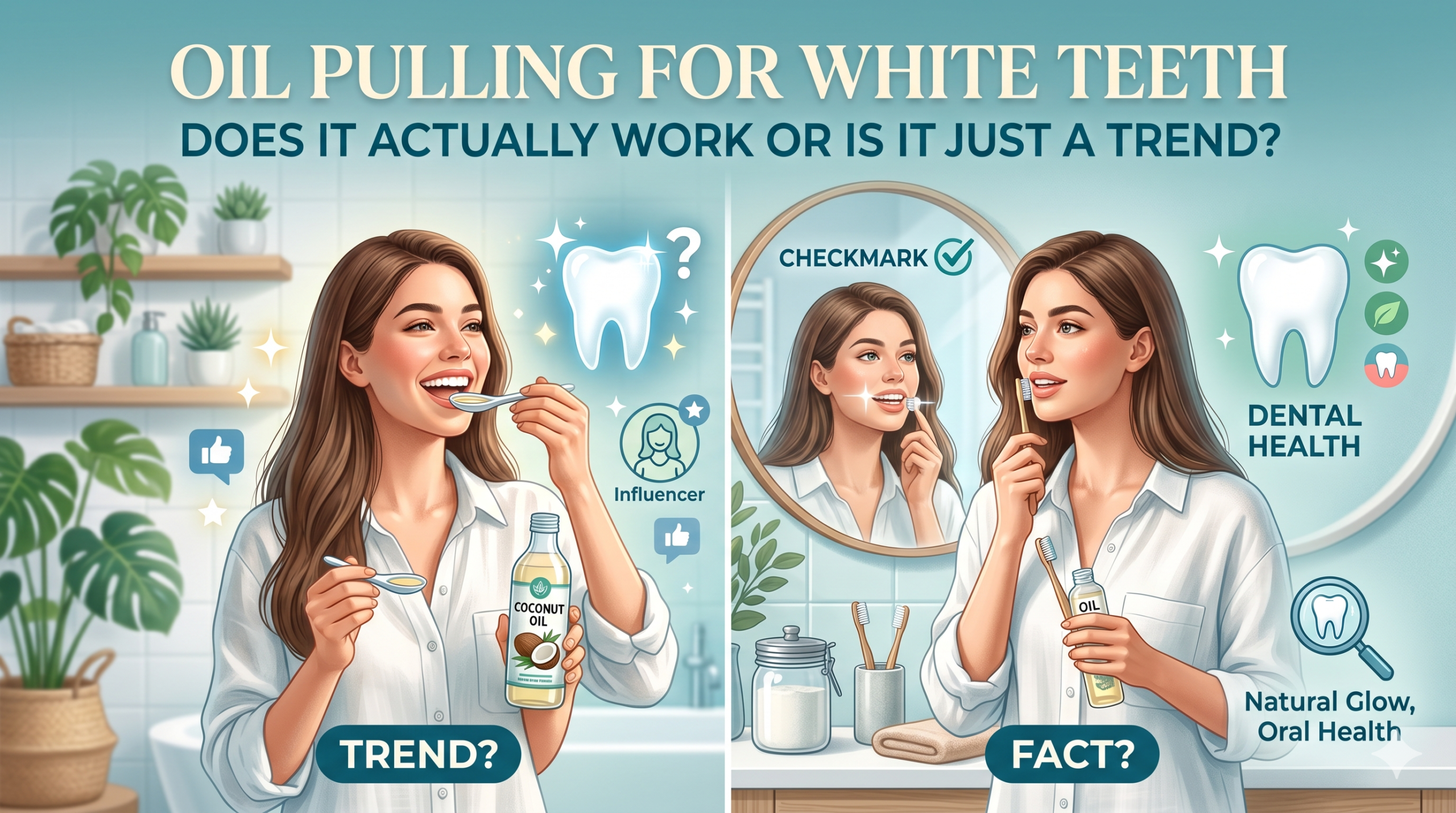
If you have spent any time on wellness social media in the last few years, you have almost certainly come across oil pulling. Influencers swear by it. Ayurveda has practised it for centuries. And somewhere in between, a lot of people are waking up every morning and swishing coconut oil around their mouth for 20 minutes hoping for whiter, healthier teeth.
But does it actually work?
The honest answer is: partly — and not quite in the way most people think. Oil pulling has some genuine benefits that are backed by research. But it also has some very inflated claims attached to it that do not hold up under scrutiny.
This blog cuts through the noise and gives you a clear picture of what oil pulling can and cannot do for your oral health.

What Is Oil Pulling for White Teeth?
Oil pulling is an ancient Ayurvedic practice that involves swishing a tablespoon of edible oil — typically coconut, sesame, or sunflower oil — around the mouth for 10 to 20 minutes, then spitting it out.
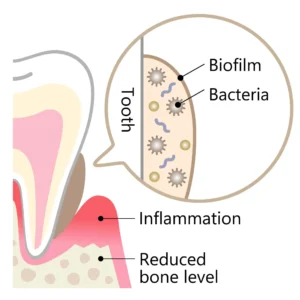
The idea behind it is that the oil “pulls” bacteria and toxins from between the teeth and along the gumline. When you spit the oil out, you are expelling those bacteria along with it.
The practice has been around for thousands of years in traditional Indian medicine. Its recent resurgence is largely driven by the wellness industry and social media, where it is often marketed as a natural alternative to conventional dental care — and sometimes, as a whitening treatment.
What Does the Research Actually Say?
This is where things get more nuanced.
There is a reasonable body of research on oil pulling — more than you might expect for a traditional remedy. And some of it shows genuinely promising results, particularly in the area of bacterial reduction.
Several studies have found that regular oil pulling can reduce the levels of Streptococcus mutans — one of the primary bacteria responsible for tooth decay — in the mouth. A study published in the Journal of Ayurveda and Integrative Medicine found that oil pulling with sesame oil was as effective as chlorhexidine mouthwash in reducing bacterial counts and plaque levels in adolescents.
Other studies have found modest reductions in plaque and mild improvement in gum health with consistent oil pulling over several weeks.
These are real findings. They are not nothing.
But — and this matters — most of these studies are small, and few meet the rigorous standards of large-scale clinical trials. The results are encouraging, not conclusive.
Can Oil Pulling Actually Whiten Your Teeth?
This is the claim that gets the most attention online — and also the one with the least scientific backing.
Oil pulling does not contain any bleaching agents. It does not chemically break down the staining compounds on enamel the way professional whitening treatments or even whitening toothpastes do.
What it can do is remove some surface-level debris and reduce bacterial biofilm — which may give teeth a slightly cleaner appearance over time. Some people also report that consistent oil pulling leaves their teeth feeling smoother and looking a little brighter.
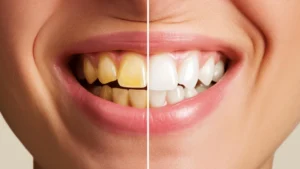
But that is surface cleanliness, not whitening. If your teeth are stained from years of tea, coffee, or tobacco, oil pulling is not going to meaningfully change that. For actual whitening results, professional teeth whitening treatments work on an entirely different mechanism — one that oil alone simply cannot replicate.
What Oil Pulling Can Genuinely Help With
Even if the whitening claims are overstated, there are some areas where oil pulling appears to offer real, if modest, benefits.
Reducing Harmful Bacteria
The mechanical action of swishing oil through the teeth and along the gums for an extended period does appear to reduce bacterial load in the mouth. The oil may trap bacteria, which are then removed when you spit. For people who are prone to high plaque build-up or mild gum inflammation, this could be a useful supplementary habit.
Freshening Breath
Because it reduces bacteria — one of the primary causes of bad breath — consistent oil pulling may help with persistent bad breath that has an oral bacterial origin. It is not a cure for halitosis that has an underlying cause like gum disease or tooth decay, but as a complementary habit, it can help.
Supporting Gum Health
Some research suggests that oil pulling may reduce gingival inflammation — early-stage gum irritation. If you have mildly sensitive or bleeding gums, adding oil pulling to your routine alongside brushing and flossing could provide some additional benefit.

How to Do Oil Pulling Correctly
If you want to try oil pulling, here is how to do it properly.
Take one tablespoon of coconut or sesame oil first thing in the morning, before eating or drinking anything. Swish it gently around your mouth — through the teeth and along the gums — for 10 to 20 minutes. Do not swallow it. The oil will become thinner and milky as it mixes with saliva.
Spit the oil into a bin, not the sink — it can solidify and block drains over time. Rinse your mouth thoroughly with water, then brush your teeth as normal.
A few things worth noting: do not swish aggressively. The point is gentle, prolonged contact — not a vigorous workout for your jaw. And do not use oil pulling as a reason to skip brushing or flossing. It is a supplement to your routine, not a replacement.
What Dentists Actually Think
Most dentists take a balanced view. Oil pulling is not harmful when done correctly, and there is enough evidence of modest benefit that dismissing it entirely would be unfair.
The concern is not with the practice itself — it is with how it is marketed. When oil pulling is presented as a substitute for professional dental care, or as a whitening treatment that delivers results comparable to clinical procedures, that is where it crosses into misinformation.
The fundamentals of oral health — brushing twice daily, flossing, staying hydrated, reducing sugar, and visiting a dentist regularly — are supported by decades of strong evidence. Oil pulling, at best, is a useful addition to those habits. It is not a shortcut around them.
The Bottom Line
Oil pulling is not a myth — but it is not magic either.
It has been practised for thousands of years for good reason. The science, while limited in scale, suggests it can modestly reduce bacteria, support gum health, and contribute to fresher breath. As a morning ritual that complements a solid oral hygiene routine, there is little downside to trying it.
What it will not do is whiten your teeth in any meaningful, lasting way. It will not reverse gum disease, fill cavities, or remove hardened tartar. And it should never be used as an excuse to delay a visit to the dentist.
If genuinely whiter teeth are the goal, an honest conversation with your dentist about teeth whitening options will give you a clearer path to results that actually show.
FAQs
- How long does it take to see results from oil pulling? Most people who report benefits notice changes in breath freshness and how clean their teeth feel within 2 to 4 weeks of daily practice. Expecting visible whitening results is unlikely regardless of duration.
- Which oil is best for oil pulling? Coconut oil is the most popular choice today, largely due to its taste and the presence of lauric acid, which has antimicrobial properties. Sesame oil is the traditional choice in Ayurveda and is also well studied. Either works.
- Can children do oil pulling? It is generally not recommended for young children due to the risk of accidentally swallowing the oil. Older teenagers can try it with parental guidance, but it is not a substitute for supervised brushing and regular dental visits.
- Is it safe to do oil pulling every day? Yes, when done correctly. Swallowing the oil should be avoided as it contains the bacteria and debris pulled from the mouth. If you experience jaw soreness, reduce the duration or swish more gently.v
- Can oil pulling reverse cavities or gum disease? No. Oil pulling can support a healthy oral environment but it cannot reverse established decay or treat active gum disease. These conditions require professional dental treatment.
Published by Vivaan Dental Clinic | Sector 90, Gurugram
Curious about what actually works for a brighter smile? We are happy to walk you through your options.