Introduction
Here is a question: when did you last replace your toothbrush?
If you are trying to remember that is probably your answer.
Most of us brush twice a day without giving much thought to the tool we are using. But an old, worn-out toothbrush does not just clean less effectively. It can actually harbour bacteria, damage your gums, and give you a false sense of security about your oral health.
The good news is this is one of the easiest things to fix. You just need to know when and why.
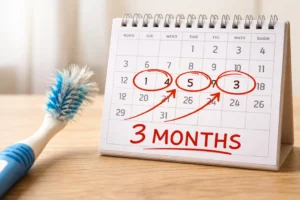
The Simple Answer: Every 3 to 4 Months
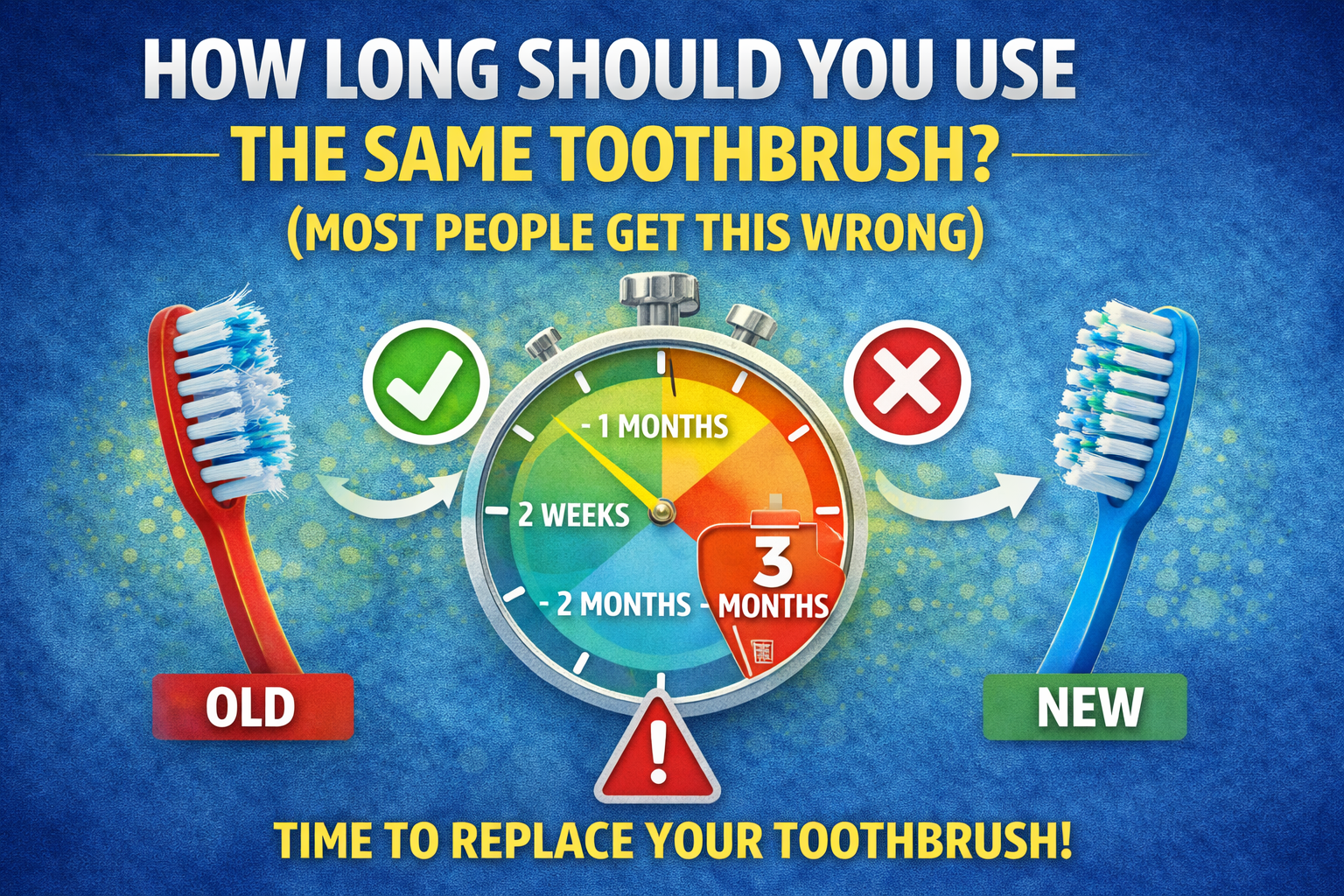
According to dental health guidelines, you should replace your toothbrush or the head of your electric toothbrush every 3 to 4 months. That works out to roughly 4 new toothbrushes a year.
But here is where most people go wrong: they wait until the bristles look completely destroyed before making the switch. By that point, their toothbrush has been underperforming for weeks, maybe months.
A toothbrush does not need to look terrible to be ineffective. Even moderate bristle wear is enough to reduce its cleaning ability significantly.
What Happens When You Use an Old Toothbrush
Bristles Lose Their Shape
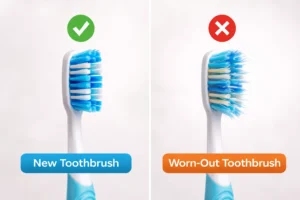
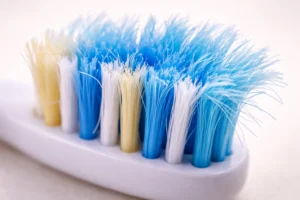
Bristles are designed to reach between teeth and along the gumline at a specific angle. When they fray, bend, or splay outward, they lose that precision. You are still going through the motion of brushing but large portions of your mouth are not being cleaned properly.
Studies have shown that a toothbrush used for just 40 days removes significantly less plaque than a new one. Most people are using theirs well past that point.
Bacteria Build Up Over Time
Your toothbrush sits in your bathroom often near the toilet and is exposed to moisture, air, and whatever is floating around in that environment. Over time, it accumulates bacteria, mould, and yeast, especially if it stays damp between uses.
Rinsing your toothbrush after use helps, but it does not eliminate everything. The older the brush, the more opportunity bacteria have had to settle in. This is particularly important if you have been unwell after any illness, replacing your toothbrush immediately is a good habit.
Your Gums Pay the Price
Stiff, frayed bristles can be surprisingly harsh on gum tissue. Instead of gently massaging and cleaning along the gumline, old bristles can scratch and irritate. Over time, this kind of repeated micro-trauma can contribute to gum recession a condition where the gum tissue pulls back, exposing the sensitive root of the tooth.
Signs You Should Replace Your Toothbrush Right Now
You do not always need to wait for the 3-month mark. Replace your toothbrush immediately if:
- The bristles are visibly splayed, bent, or flattened
- You have recently recovered from a cold, flu, throat infection, or mouth ulcers
- You dropped it on the floor (yes, really rinse and replace)
- You cannot remember the last time you changed it
- Someone else in your household used it by mistake
Manual vs. Electric Toothbrush — Does It Change Anything?
Not much, when it comes to replacement timing. Electric toothbrush heads should also be replaced every 3 to 4 months, and often sooner because the high-frequency movement causes bristles to wear faster.
The advantage of an electric toothbrush lies in its consistent motion and timer features not in lasting longer. If your brush head looks worn, swap it out regardless of how long you have had it.
If you are unsure whether an electric toothbrush is right for you, it is worth asking your dentist during your next visit.
How to Take Better Care of Your Toothbrush
While you are using it, a few simple habits can keep your toothbrush cleaner for longer:
- Rinse thoroughly after every use to remove toothpaste and debris
- Store it upright so it air-dries between uses horizontal storage in a closed case traps moisture and promotes bacterial growth
- Do not share toothbrushes ever, even with family members
- Keep it away from the toilet flushing releases fine particles into the air (yes, this is real, and yes, it reaches your toothbrush)
- Avoid covering bristles with a cap unless you are travelling caps trap moisture
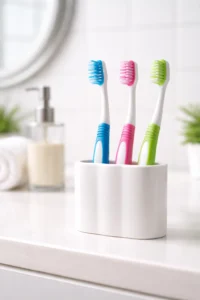
Children’s Toothbrushes Need Replacing Even More Often
Kids tend to chew on their toothbrushes, bite down on the bristles, and use them with much more force than adults. Their toothbrushes can wear out in as little as 6 to 8 weeks. Keep an eye on the bristles if they are flaring out, it is time for a new one.
Getting children into the habit of regular toothbrush replacement early also builds a good foundation for lifelong dental hygiene.
The Bigger Picture — Your Toothbrush Is Just One Part
A good toothbrush, replaced regularly, is the foundation of oral care. But it cannot do everything on its own. Brushing does not reach the spaces between your teeth, cannot remove hardened tartar, and cannot detect early signs of cavities or gum problems.
That is why a routine dental check-up every six months matters so much. A professional cleaning removes what brushing misses, and an early diagnosis of any issue is always easier — and less expensive — to treat.
Quick Recap
- Replace your toothbrush every 3 to 4 months
- Replace immediately after illness or if bristles are visibly worn
- Store it upright, uncapped, and away from the toilet
- Children’s brushes may need replacing more frequently every 6–8 weeks
- A good toothbrush is a start but it does not replace professional dental care
FAQs
- Can I use a toothbrush for longer if the bristles still look okay? Not recommended. Even if bristles look intact, bacterial buildup and reduced micro-cleaning efficiency are still concerns after 3 months. Stick to the schedule.
- Does soaking my toothbrush in mouthwash help sanitise it? It can reduce surface bacteria temporarily, but it is not a substitute for replacement. Some dentists also caution against this for prolonged periods as it may damage bristles.
- Is a more expensive toothbrush worth it? A soft-bristled, well-designed brush whether manual or electric is what matters most. Price does not always equal better cleaning. Technique and consistency matter far more.
- What type of bristles should I use? Always opt for soft bristles. Medium and hard bristles might feel more thorough, but they can damage enamel and gum tissue over time.
Published by Vivaan Dental Clinic | Sector 90, Gurugram For appointments and consultations, reach out through our website.